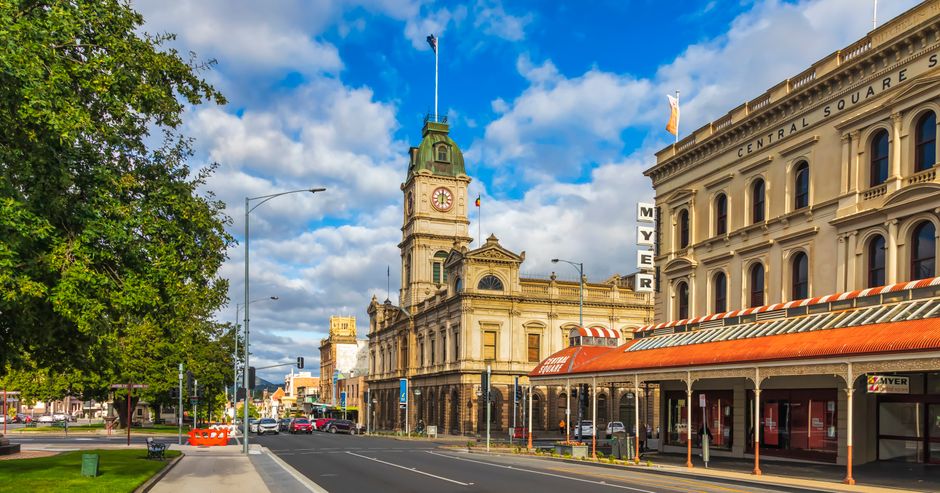
Walk down Pall Mall today and you'll see solar panels glinting off the rooflines of heritage buildings, electric buses humming along the route where diesel engines once ruled. But this wasn't always the vision for Bendigo. The journey to becoming one of regional Victoria's most ambitious sustainability hubs required a fundamental reckoning with the city's industrial identity.
In the early 2000s, Bendigo's environmental footprint told a familiar story. The city's manufacturing sector—textiles, engineering, food processing—ran predominantly on brown coal power. Landfill usage was climbing. The Campaspe River, vital to local agriculture and recreation, bore the scars of decades of industrial discharge. By 2008, household waste per capita in the municipality sat at 680 kilograms annually, well above the national average.
The turning point came gradually. Community groups like the Bendigo Environmental Voices began raising concerns about air quality around the industrial precinct near North Bendigo. Simultaneously, manufacturing began its inevitable decline, forcing the city to ask itself what it could become instead. The 2010 release of the Bendigo Sustainability Charter marked an inflection point—the city formally committed to carbon neutrality targets by 2050.
What followed was a cascade of initiatives that reshaped daily life across Bendigo's suburbs. The Council's kerbside organics program, launched in 2015, diverted 12,000 tonnes of organic waste annually within five years. The Bendigo Community Solar Garden, established in partnership with local investors, now powers equivalent households at rates 15-20 percent below grid average. Water conservation measures introduced after the 2012-2016 drought reduced council irrigation across reserves and golf courses by nearly 40 percent.
Perhaps most visibly, the Bendigo Retrofit Program beginning in 2018 transformed thousands of weatherboard homes across White Hills, Golden Square, and Long Gully, improving thermal efficiency and reducing heating costs by an average of $400 annually for participants. The program's $8.2 million investment from state government funding created over 250 local jobs in insulation, solar installation, and auditing.
Today, Bendigo's renewable energy generation capacity has grown from 12 megawatts in 2015 to 87 megawatts. Waste to landfill has dropped 34 percent over the same period. These aren't abstract metrics—they reflect years of municipal planning, community pressure, and economic necessity converging.
The path wasn't predetermined. It emerged from difficult questions about identity and survival, asked first by activists and eventually embraced by policy-makers. For a city built on gold and manufacturing, sustainability became the unexpected next chapter.
This article was compiled by AI from the sources linked above and screened before publishing. See our editorial standards.