Wellness
Shift Workers and Irregular Sleep: Practical Strategies
Bendigo night-shift staff at the health campus and rail-trail users are testing timed light exposure and fixed wind-down windows to counter disrupted rest.
2 min read
Updated 10 h ago
Wellness
Bendigo night-shift staff at the health campus and rail-trail users are testing timed light exposure and fixed wind-down windows to counter disrupted rest.
2 min read
Updated 10 h ago

Bendigo Health campus on Lucan Street reported a 22 percent rise in staff sick leave linked to sleep complaints among its rotating roster employees between January and June this year.
The increase coincides with longer winter nights and roster changes at the 400-bed facility, where nurses and support workers often finish at 7 am after overnight shifts. Local GP clinics along View Street have noted more patients requesting sleep assessments, reflecting a national pattern where irregular hours clash with body clocks. Shift work remains common in regional health services and transport, leaving many residents juggling alertness at work against daytime recovery at home in suburbs such as White Hills and Golden Square.
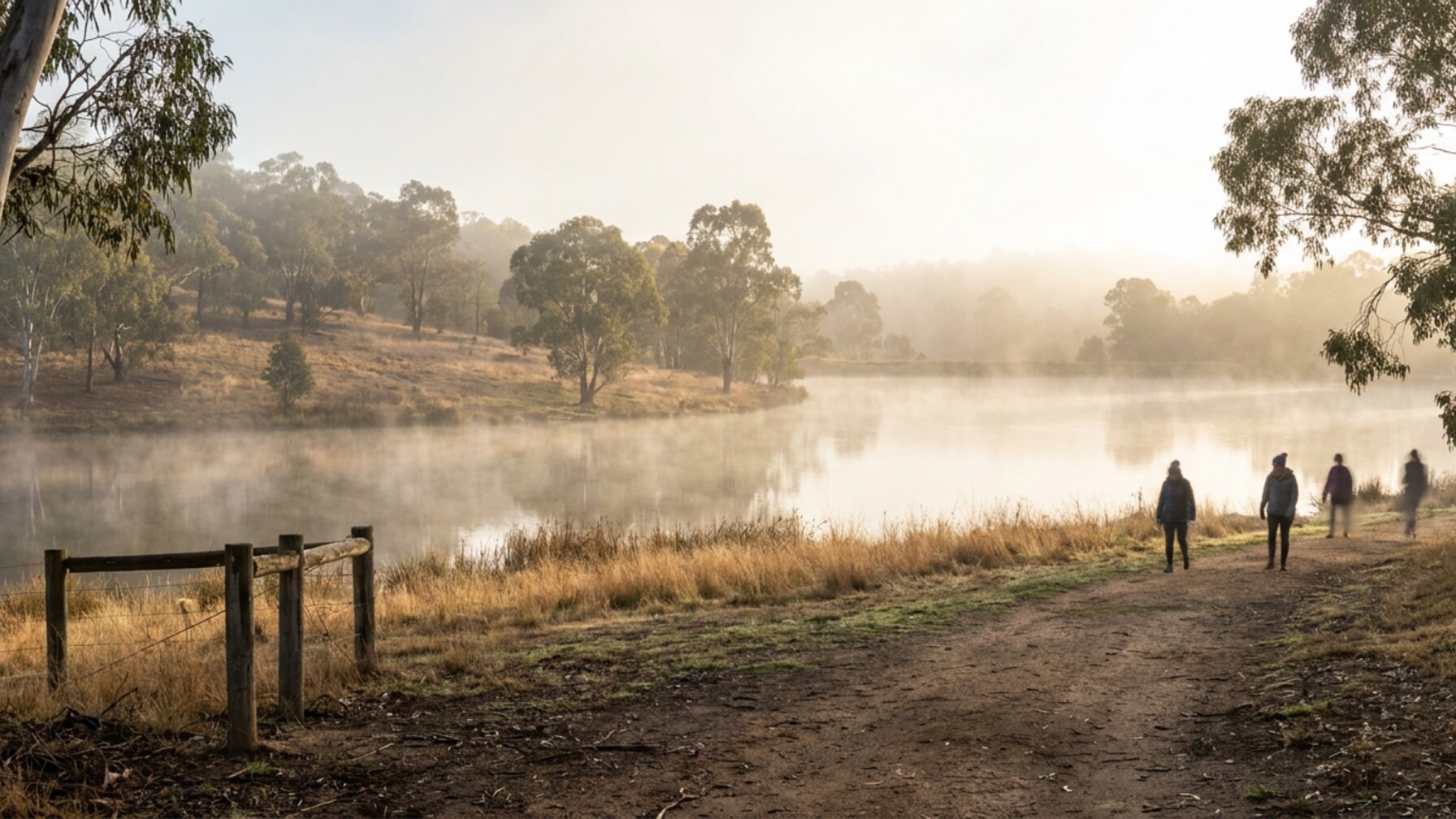
Workers finishing at the campus often use the nearby Bendigo Creek recreational trail for a 20-minute walk before heading home, aiming to lower core temperature and signal wind-down. Others join the weekly Rosalind Park parkrun on Saturday mornings when their roster allows, treating the 5 km loop as a fixed anchor point rather than an optional extra. These short outdoor exposures replace longer gym sessions that many cannot schedule. The Murray to Mountains Rail Trail, accessible from the east of town, offers an alternative for those on afternoon shifts who prefer cycling before sunset.
Prices for basic sleep trackers sold at Bendigo pharmacies start at $89, with some staff pooling funds for shared devices to test light settings. The campus occupational health team began distributing free blackout curtains to night-shift households in May, following a trial that showed participants gained an average 47 minutes of consolidated sleep per day.
Australian Bureau of Statistics figures from 2024 indicate 16 percent of the workforce operates on shift patterns, with regional Victoria showing higher rates in health and logistics. Studies cited by the Sleep Health Foundation link these patterns to elevated fatigue risk, particularly when daylight savings or seasonal light changes disrupt established cues. Bendigo residents can start with three fixed actions: keep the same bedtime window even on days off, use bright light within 30 minutes of waking, and cap caffeine after the midpoint of a shift. Those experiencing persistent issues are advised to book a review at Bendigo Health campus occupational services or their local clinic rather than relying on over-the-counter remedies alone.

Wellness

Wellness
Wellness

Wellness

Wellness

Wellness
About this articleBeta
Published by The Daily Bendigo
Spread the word
Daily brief
Free, in your inbox before 7am. Weekdays.
The Daily Network — local news across Australia