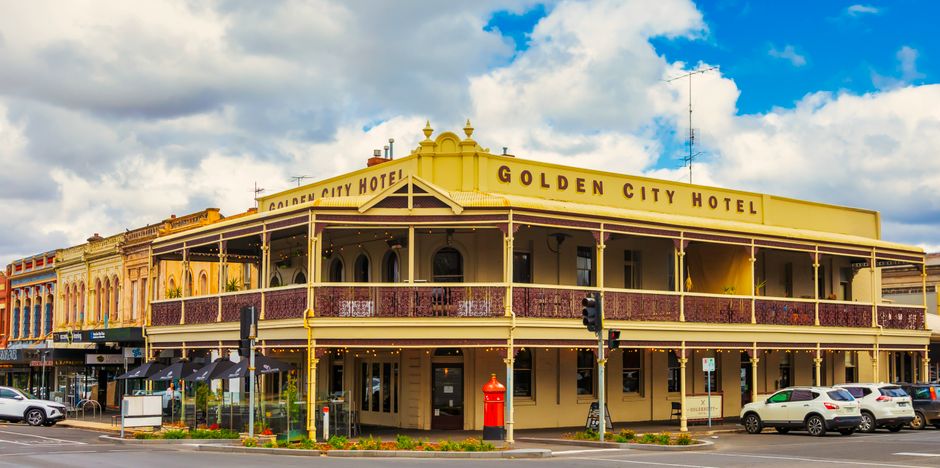
Bendigo is getting noticed by the wrong people at the wrong time. Just as Australian property prices have cooled and first-home buyers have stepped back from the market, international relocators are arriving with cash and curiosity, asking questions that locals rarely ask anymore: What's the cost of living here? Can I actually afford a house? Will my family have space to breathe?
The timing matters. Global expat networks and relocation consultants have spent years pushing workers toward Sydney and Melbourne, where housing has become prohibitively expensive. Bendigo, 150 kilometres north-west of Melbourne, is suddenly appearing on spreadsheets as an alternative that works on paper—and increasingly, works in practice. The city attracted 1,847 international migrants in the 2023-24 financial year, according to Department of Home Affairs data, a 23 per cent jump from the previous year. That's still modest compared to Australia's major capitals, but the trajectory is sharp.
What draws them here isn't what the tourism board typically advertises. It's the gap between what they expected Australian city life to cost and what they actually encounter.
The economics of arrival
A furnished three-bedroom house in the inner suburbs—say, in Kangaroo Flat or Spring Gully—rents for $380 to $420 per week. That same property costs 40 per cent more in inner Melbourne. Purchase prices tell a starker story. The median house price in Bendigo sat at $620,000 in mid-2026, compared to $1.1 million across greater Melbourne. For expat families coming from London (median house price: £520,000, or approximately $970,000 AUD) or Toronto (median: CAD $750,000, or roughly $710,000 AUD), the arithmetic is compelling.
"People arrive expecting to find a smaller version of Sydney," says a program manager at Bendigo's Migration and Settlement Services, which has fielded increasing inquiries from incoming residents over the past 18 months. "Instead, they find a city with its own character. They're surprised by how much there is to do."
The city centre still functions as an actual centre, something Singapore expats and London transplants mention repeatedly. High Street remains a genuine main street, not a hollowed-out service strip. The Bendigo Pottery precinct employs 150 people directly and draws tourists, but it's also embedded in the working landscape. The Bendigo Art Gallery sits three blocks from the market gardens that feed locals on weekends. This isn't nostalgia—it's functional density at a human scale.
What stays and what changes
Newcomers consistently report three surprises. First, the food culture is sharper than expected. The city's Vietnamese, Lebanese, and Indian communities have been here for decades, not discovered yesterday by hipster chefs seeking authenticity. Second, the Bendigo Performing Arts Centre programs substantively different work than Melbourne venues—not because it's trying harder, but because it doesn't need to compete on the same scale. Third, winter is actually cold. Expats from warmer climates invariably underestimate this.
The cost advantage doesn't last forever. Bendigo is expensive by rural Australian standards, and the gap with Melbourne narrows annually. But right now, for a family of four with household income above $120,000, the calculation still works.
If you're arriving in Bendigo in the next few months, connect with the Bendigo Community Refugee Services and the local chambers of commerce early. They host networking events monthly and can fast-track your understanding of how the place actually functions. Budget time to walk Rosalind Park and visit Golden Dragon Museum to understand the layered history. Join a local community group—Bendigo Foodbank Volunteers or the Bendigo Runners Club are genuine meeting points, not tourist experiences.
Expect to stay. Most expats who arrive with three-year contracts are still here after five.