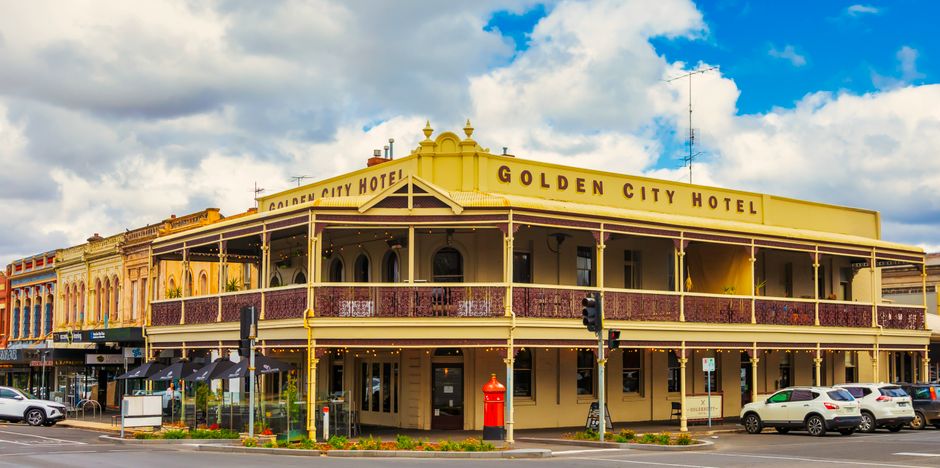
Bendigo isn't trying to be Sydney or Melbourne. That restraint is precisely what's working.
While first-home buyers across Australia are freezing on property purchases as prices remain stubborn, Bendigo is experiencing something different. The central Victorian city has developed a neighbourhood identity that relies less on the premium lifestyle branding you'll find in Fitzroy or inner Brisbane, and more on the particular alchemy of affordability, genuine community infrastructure, and unironic embrace of its gold-rush past. The median house price here hovers around $545,000-roughly $150,000 below Melbourne's median-yet the city boasts heritage architecture, cultural institutions, and street-level activation that rival cities twice its size have spent decades trying to manufacture.
The distinction matters now because Australia's property slowdown is forcing people to ask what neighbourhood life actually means. It's no longer enough to buy into a postcode's Instagram aesthetic. Bendigo forces the conversation back to basics: walkability, access to genuine gathering spaces, and whether your neighbours actually know each other's names.
Where gold digging meets grassroots placemaking
The Bendigo Central Shared Spaces precinct, which wraps around the historic Ulumbarra Theatre on View Street, represents this philosophy in concrete form. Rather than retrofitting café culture onto a dead high street, the city worked with local traders and resident groups to reclaim underused laneways and courtyards. The result feels organic in a way that developer-led activation rarely achieves. Walk through the laneway between View Street and Pall Mall on a Friday evening and you'll find buskers, pop-up bars, and people eating takeaway on mismatched chairs-not because a marketing team planned it, but because the space became genuinely useful.
Across the city, the Bendigo Community Garden Network runs six established plots, the largest sprawling across Crown Reserve near the Rosalind Park precinct. For $35 annually, locals grow vegetables, run workshops on food preservation, and build relationships that shopping centres simply cannot manufacture. These spaces have waiting lists. That fact alone distinguishes Bendigo from cities where community gardens remain niche curiosities.
The Bendigo Arts Centre on View Street has become something closer to a cultural anchor than a traditional gallery. Its programming deliberately leans toward participatory art and experimental work rather than touring blockbusters. Between July and September, the centre runs its Winter Festival with work by emerging artists from the region-the kind of programming that keeps cultural energy distributed across the city rather than concentrated in one elite precinct.
Price meets place in ways other cities have abandoned
A one-bedroom apartment in central Bendigo rents for approximately $280 weekly. A two-bedroom house in the nearby neighbourhood of Kangaroo Flat costs $420,000. These figures don't sound remarkable until you compare them to equivalent Melburnian postcodes, where the same property would run $780,000-plus. That price difference allows younger people to actually live in walkable neighbourhoods rather than aspiring to them. It's not novel economics, but it's increasingly rare in Australian city planning.
The Bendigo Neighbourhood House operates community programs across four locations, with everything from language classes to repair cafés. Usage numbers have climbed 23 per cent in the past three years. That growth reflects something genuine: people living affordably in a walkable city are more likely to actually engage with community infrastructure once they move in.
For anyone considering a shift away from Australia's overheated property markets, Bendigo works precisely because it hasn't tried to become something it isn't. The city has money-the regional economy still generates $2.8 billion annually-but it's refused the developer-led homogenisation that's flattened distinctiveness from Brisbane to Perth. That restraint reads as an asset now, not a limitation.