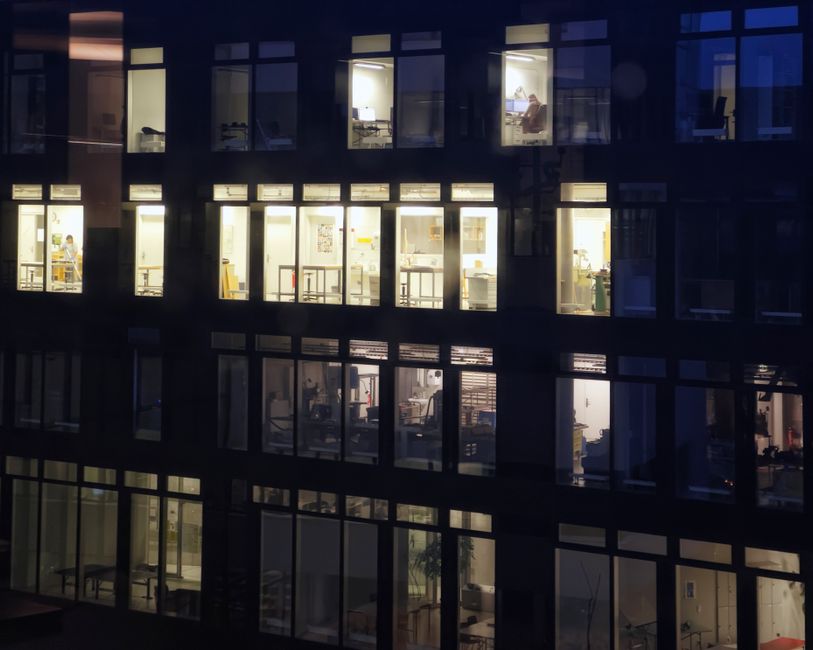
Commercial office space in central Bendigo is sitting at a vacancy rate of roughly 11 percent, according to figures compiled by local property managers in the June 2026 quarter — up from about 8 percent this time last year. That single number carries more weight than it might first appear. It signals a tightening squeeze on landlords, a modest advantage for tenants negotiating leases, and a cooling of the speculative investor appetite that drove deal volumes through 2023 and 2024.
The timing matters. Melbourne's residential investment market has shed buyers sharply since the state budget landed earlier this year, with auction clearance rates slumping and institutional money retreating. That capital has to go somewhere, and some of it has been trickling into regional commercial assets — Bendigo among them. But the flow is uneven, and understanding where it's landing, and why, is the difference between a smart lease decision and an expensive one.
Mitchell Street and the Hargreaves Mall Effect
The clearest split in the Bendigo market runs between the Mitchell Street retail corridor and the secondary office stock clustered around View Street and the Hargreaves Street end of the CBD. Ground-floor tenancies on Mitchell Street, particularly those within 200 metres of the Bendigo Bank headquarters on Pall Mall, are holding firm on face rents of around $380 to $420 per square metre per annum. Effective rents, after incentives, are somewhat lower — landlords are offering fitout contributions and rent-free periods of up to three months to secure tenants in a market where foot traffic patterns have not fully normalised since the post-pandemic reshuffling of office routines.
The upper-floor office market is a different story. Suites above 200 square metres in older buildings along Queen Street and Williamson Street are sitting vacant for longer — average time-on-market has stretched to about 4.2 months compared with 2.8 months in mid-2024. The Central Deborah Gold Mine precinct and the Bendigo Creative Arts precinct have anchored some foot traffic on the western fringe of the CBD, but that activation hasn't translated into a corresponding lift in nearby office take-up.
Regional Development Victoria has maintained an active presence in directing small business grants toward Loddon Mallee region operators, and several recipients have taken up flexible workspace arrangements at co-working facilities including the Bendigo Innovation Hub on Arnold Street rather than committing to traditional leases. That trend is compressing demand for conventional office space even as the city's population grows.
What Yields Are Telling Investors
Commercial property yields in Bendigo's CBD have edged out to between 6.2 and 7.1 percent for freehold office and retail assets — up from the 5.5 to 6 percent range that prevailed through the low-interest-rate period of 2021 and 2022. That outward movement reflects the higher cost of debt, with business lending rates from major banks sitting above 7 percent for most commercial borrowers as of July 2026. The arithmetic is straightforward: when borrowing costs exceed or match the asset yield, leveraged investment loses its appeal fast.
For cash buyers or self-managed superannuation funds with lower financing costs, however, Bendigo commercial property still presents a reasonable risk-adjusted return compared with Melbourne assets, where prime CBD yields have compressed to the low 5 percent range despite weaker fundamentals. A freehold strata office on Williamson Street that traded for $1.1 million in early 2025 would likely find buyers in the $980,000 to $1.05 million range today — a modest correction, not a collapse.
Businesses approaching lease renewals in the next six months are in a stronger negotiating position than they have been in several years. Landlords with vacancies are dealing, and the window for extracting incentives — shorter initial terms, capped rent reviews, fitout support — is open now. Those incentives tend to tighten once vacancy starts falling. Local commercial agents expect that correction to begin in the second half of 2027 if the city's population trajectory, forecast to reach 130,000 residents by 2028 under the Greater Bendigo City Council's growth projections, continues to drive service-sector employment into the CBD. Sitting on the sidelines too long has its own costs.