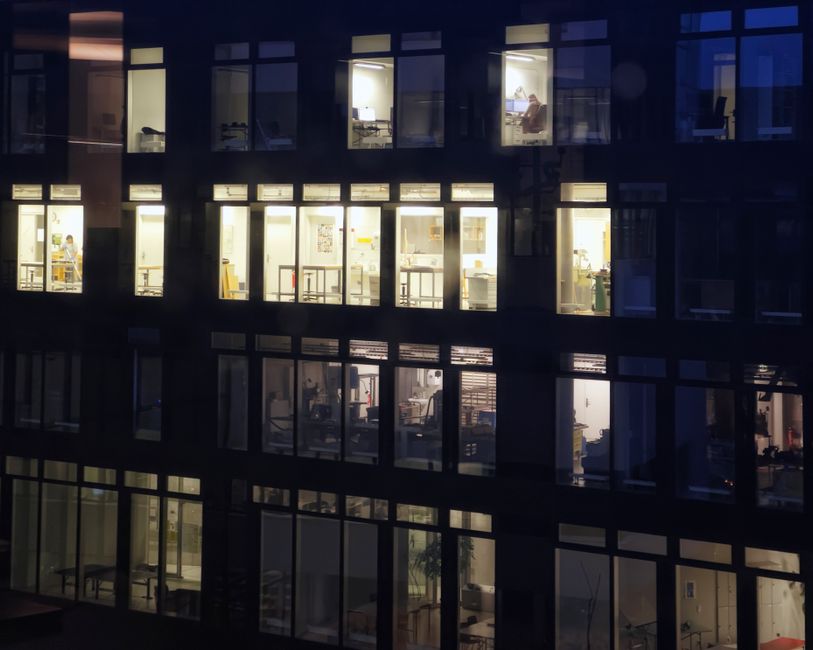
Commercial office vacancy rates across regional Victoria have climbed to their highest point since 2010, and Bendigo's central business district is not immune. Data compiled by the Property Council of Australia for the first half of 2026 puts B-grade office vacancy in the Bendigo CBD at roughly 14 percent, up from 9 percent three years ago, as hybrid work schedules persist and tenants downsize or renegotiate leases on shorter terms.
The timing matters because two converging forces are now reshaping the national commercial property map simultaneously. Cooling residential prices have spooked investors who might otherwise cross-fund commercial acquisitions. At the same time, industrial land around Melbourne's outer fringe is being consumed by AI data-centre developers at a pace that property economists say is crowding out freight logistics and, indirectly, pushing some operators to reconsider regional centres like Bendigo as lower-cost alternatives. For a city of Bendigo's size and connectivity, sitting 150 kilometres north-west of Melbourne on the Calder Freeway, that creates a genuine two-sided equation: more potential tenants looking outward, but also a local market already carrying excess space.
What the Numbers Look Like on the Ground
Walk along View Street or the upper end of Mitchell Street on a Thursday afternoon and the vacancy signs are easy to spot. Several floors above the Bank of Melbourne branch on Mitchell Street have been listed for lease since early 2025, asking around $280 per square metre annually, a figure agents say landlords have already trimmed once this year without securing tenants. The Bendigo CBD still benefits from anchor institutions: Bendigo Health's expanding workforce keeps some hospitality and professional-services demand ticking over, and La Trobe University's Bendigo campus on Edwards Road provides a steady pipeline of start-up and consultancy activity looking for affordable fit-out space.
The Bendigo Innovation Hub, which operates out of a co-working facility on Hargreaves Street, reported a 22 percent increase in short-term desk memberships in the 12 months to March 2026, even as its long-form private office leases stayed flat. That tells a clear story: businesses want flexibility, not five-year commitments. Nationally, the Property Council's mid-2026 survey found median lease terms for sub-500-square-metre tenancies have fallen to 2.1 years, compared with 3.4 years in 2019.
Across the broader Bendigo commercial strip, new listings on Pall Mall, traditionally the prestige address, have stagnated in price but not in volume. Four separate tenancies between the Shamrock Hotel and the corner of Williamson Street came to market between January and June this year, most asking between $350 and $420 per square metre. None had settled as of late June, according to agency records reviewed for this article.
Adapting Before the Next Cycle Arrives
The conversation among local property professionals is increasingly about repurposing rather than waiting for a traditional office recovery that may not arrive on the old schedule. The City of Greater Bendigo's Economic Development Strategy 2024-2028 explicitly flags adaptive reuse of upper-floor commercial space as a priority, and council officers have been in preliminary discussions about planning scheme amendments that could ease conversion of vacant B-grade offices into residential or mixed-use tenancies without triggering full rezoning processes.
That matters because the national data-centre rush, concentrated near Melbourne's western industrial corridor in Truganina and Laverton North, is generating a secondary ripple. Companies priced out of industrial land near the city are making genuine inquiries about Bendigo's Marong Business Park as a lower-cost logistics node, which could eventually underpin demand for supporting professional services office space locally.
For Bendigo business owners navigating lease renewals this year, the practical read is straightforward: landlords are negotiating. Shorter terms, fitout contributions, and rent-free periods of three to six months are all on the table in ways they were not in 2022. Tenants who act before the next interest rate cycle shifts sentiment back toward investment will find the most room to move. The city's commercial property story is not a crisis, it is a reset, and the businesses that treat it as one will be better positioned when the next phase begins.