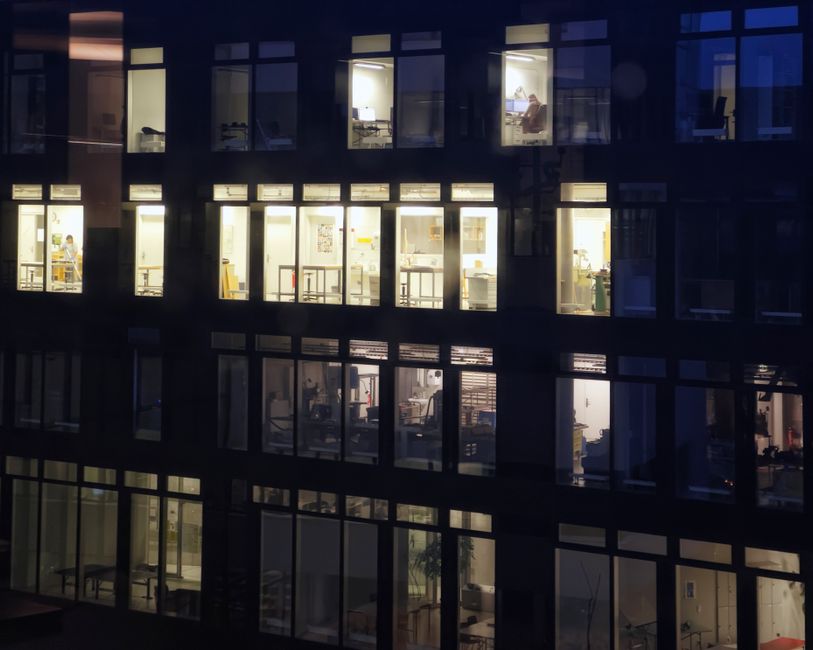
Bendigo's commercial landlords are sitting with vacancy rates not seen since the tail end of the pandemic, and the reason has as much to do with decisions made in Sydney, San Francisco and Singapore as anything happening on View Street. The city's CBD office market — centred on Mitchell Street and the Hargreaves Mall precinct — recorded a vacancy rate nudging 14 percent in the first half of 2026, according to figures compiled by local property advisory firm Central Victorian Commercial. That number would have been unthinkable five years ago.
The timing matters. Nationally, demand for industrial and commercial land is being squeezed from two directions at once. The rush to build AI datacentres is absorbing large-format commercial sites at a pace that is crowding out logistics and light-industrial tenants, pushing smaller operators to reconsider their footprint. Simultaneously, Australia's property market is softening for the first time in several cycles, cooling the investor appetite that had underpinned speculative office development in regional cities like Bendigo through 2023 and 2024. Those two pressures — one inflationary, one deflationary — are colliding in ways that make planning genuinely difficult for local business owners right now.
What's Actually Moving — and What's Sitting Empty
Walk the length of Mitchell Street on a Thursday morning and the picture is mixed. The ground-floor retail strip between Hargreaves and Williamson Street is reasonably occupied, buoyed by foot traffic from the Bendigo Marketplace and the continued draw of the Bendigo Art Gallery a few blocks away on View Street. But the upper-floor office suites — the kind of 200-to-400 square metre tenancies that once housed accountants, mortgage brokers and regional government teams — are visibly quiet. Several buildings that changed hands at premium prices in 2022 are carrying two or three vacant floors.
The Bendigo Business Hub on Mundy Street, which supports small and growing enterprises, reports that its hot-desk and co-working memberships have climbed 22 percent since January 2026 as tenants shed traditional leases in favour of flexible arrangements. That shift is not unique to Bendigo — it mirrors what Property Council of Australia data shows across every non-Sydney, non-Melbourne CBD in the country — but it has specific consequences here. When a regional professional services firm drops a five-year lease on 300 square metres and moves four staff into a co-working desk arrangement, the landlord is left carrying outgoings on a space that might re-let at 15-to-20 percent below the previous face rent.
Effective rents for B-grade office space in Bendigo's CBD are now tracking around $220 per square metre per annum, down from a high of roughly $265 in mid-2023. Incentive packages — fit-out contributions, rent-free periods — have crept back in after a brief absence, with leasing agents reporting landlords offering four to six months rent-free on three-year terms as standard.
The Practical Calculus for Bendigo Operators
For businesses deciding right now whether to renew, relocate or downsize, the leverage is real. A professional services firm coming off a lease expiry before December 2026 is in a strong negotiating position. The precinct around the Bendigo Law Courts on Breen Street has seen two significant sub-lease opportunities emerge in the past 90 days, both priced to move.
The wildcard is the pipeline of infrastructure spending flowing through central Victoria. The Bendigo Hospital's ongoing capital works and the State Government's regional office decentralisation program — which aims to relocate 200 public sector roles to Bendigo by mid-2027 — could absorb a meaningful portion of that vacant stock. Whether those commitments land on schedule will determine whether landlords spend another 18 months discounting or start recovering ground by the end of next year.
For now, the smart move for any business with a lease event on the horizon is to engage a commercial tenant advocate before going back to a landlord directly. The market has shifted enough that the asking price and the achievable price are two very different numbers on Mitchell Street this winter.